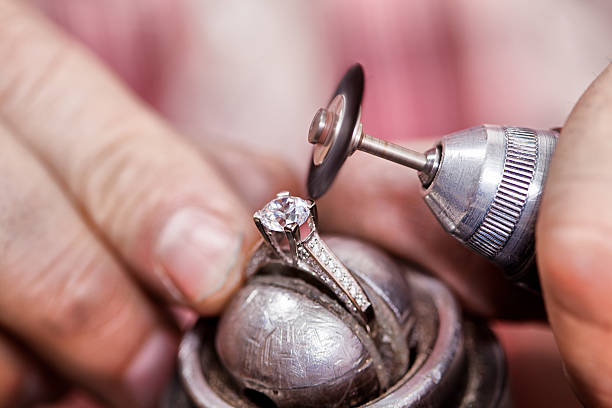
When determining the worth of your diamond ring, it’s essential to assess several factors that contribute to its overall value. Below, we break down the steps and components involved in calculating the value of your diamond ring.
Key Factors That Influence the Value of a Diamond Ring
To calculate the value of your diamond ring, you need to consider multiple aspects that extend beyond just the size of the diamond.
- Carat Weight: Larger diamonds typically fetch higher prices.
- Clarity: Fewer inclusions or blemishes increase a diamond’s grade and value.
- Color Grade: Diamonds closer to being colorless (graded D through F) are more valuable.
- Metal Type for the Band: The material used for the band also contributes to a ring’s worth.
| Metal Type | Characteristics |
| Platinum | Durable, hypoallergenic; tends to be expensive |
| White Gold | Affordable alternative with a similar look |
| Yellow Gold | Classic choice; value varies with karat level |
| Rose Gold | Unique pinkish hue; often more affordable |
Design and Brand: Rings from well-known designers (e. g. , Tiffany & Co. , Cartier) carry higher resale values due to their reputation and craftsmanship.- Market Trends: The current demand for specific diamond shapes or styles can influence pricing. For instance, cushion-cut or oval diamonds may trend higher in certain years.
- Condition of the Ring: Wear-and-tear impacts resale price. Rings in excellent condition with little damage retain more value.
Step-By-Step Process for Valuing Your Diamond Ring
- Get a Professional Appraisal
Reach out to a certified gemologist or appraiser who can evaluate your ring based on industry standards like GIA (Gemological Institute of America). This is especially helpful if you want an accurate replacement cost for insurance purposes. - Determine Market Prices for Similar Rings
Research online marketplaces such as jewelry auction sites or pre-owned platforms like Worthy or The RealReal. Compare rings with similar specifications. - Check Certification Documents
If your ring has grading reports from GIA or AGS (American Gem Society), use this documentation as proof when assessing its quality and pricing. - Assess Resale Value vs Retail ValueKeep in mind that resale value is usually lower than what was paid initially due to retailer markups—often ranging between 20%-50%.
- Consult Experts in Jewelry Re-SalesFor those looking at selling options, consignment stores, pawnshops, or certified online buyers can provide quick evaluations but may vary widely in offers.
Tools You Can Use
- Online Diamond Price Calculators
- GIA Report Check Tool
- Metal Scrap Calculators (to estimate gold/platinum band values)
Evaluating your diamond ring requires patience and attention to detail but can provide clarity on its true worth whether you’re keeping it as an heirloom or looking at selling opportunities.
A Complete Guide to Engagement Ring Valuation and Diamond Quality
Each of these plays an important role in determining not only a stone’s market value but also its beauty and appeal.
Carat Weight
Larger diamonds are rare and thus more valuable. However, it’s worth noting that carat size doesn’t necessarily equate to better quality or sparkle.
- “Magic sizes,” such as 0.
| Carat Weight | Relative Price Increase |
| 0.50 ct | Moderate |
| 1.00 ct | Significant |
| 2.00+ ct | Exponential |
Cut
The cut shapes how light interacts with the diamond, influencing its brilliance and sparkle.
- Excellent: Maximizes light reflection; the most brilliant choice.
- Very Good: Slightly less reflective but still high-quality.
- Fair/Poor: Minimal brilliance; often less desirable.
Popular shapes include round (most brilliant), princess (modern), cushion (classic), and emerald (vintage-inspired).
Color
Here’s a summary of color grades: – D-F: Considered colorless; highest value range. – K-Z: Noticeable yellow/brown hues; lower-cost options.
Clarity
Clarity measures internal flaws (inclusions) or surface imperfections (blemishes).
Additional Considerations
- Request certification from reputable labs like GIA or AGS for reliable grading information.
- Evaluate fluorescence—diamonds with strong fluorescence might appear hazy in sunlight, which can decrease their value.
By understanding these characteristics in detail, you’ll be better equipped to determine both quality and worth when evaluating your diamond ring’s overall appeal.
Understanding Diamond Ring Appraisal: Market Price and Resale Value Insights
Below, we break down key considerations and methods for evaluating the market price and resale value.
Factors Influencing the Market Price
- Cut: Refers to how well the diamond is crafted to reflect light.
- Clarity: Measures internal inclusions or blemishes. The clearer the diamond, the higher its value.
- Carat Weight: Larger diamonds (higher carat weight) tend to have exponentially higher prices due to their rarity.
- Color: Diamonds with minimal color (graded closer to “D”) are more valuable compared to those with visible hues.
- The type of metal used for the ring band—such as platinum, gold (yellow, white, or rose), or sterling silver—affects its overall worth. Precious metals like platinum and 18K gold hold higher intrinsic values than lower-karat alloys or silver.
- Consumer preferences impact pricing significantly. For example, vintage styles may hold higher appeal during certain periods, while modern minimalist designs dominate at other times.
Evaluating Resale Value
- On average, pre-owned rings sell for approximately 20–60% of their original retail price depending on condition, brand name (if applicable), and demand.
- Brand exclusivity plays a role; designer brands such as Tiffany & Co. , Cartier, or Harry Winston generally retain greater resale value compared to unbranded rings.
Steps for Resale Valuation
- Gather all original documentation such as receipts, certificates (GIA/AGS reports), and warranties.
- Assess current retail pricing through jewelers or online platforms based on comparable diamonds with matching characteristics.
- Use online diamond-buying services or consignment platforms specializing in jewelry resales for quotes.
- Consider professional appraisals from qualified gemologists for an objective opinion on worth.
| Factor | % Impact on Resale Value |
| Diamond Quality | ~50% |
| Metal Composition | ~20% |
| Brand Name | ~15% |
| Market Conditions | ~15% |
Maximizing Your Ring’s Resale Value
To ensure you receive fair compensation during resale: – Maintain your ring in excellent condition by cleaning it regularly. – Retain all original packaging and paperwork as this adds credibility. – Explore different resale options like auction houses, local jewelers, pawn shops, or online marketplaces before committing.
Understanding these key aspects will empower you with realistic insights into both current market trends and strategies for maximizing value when selling your diamond ring.
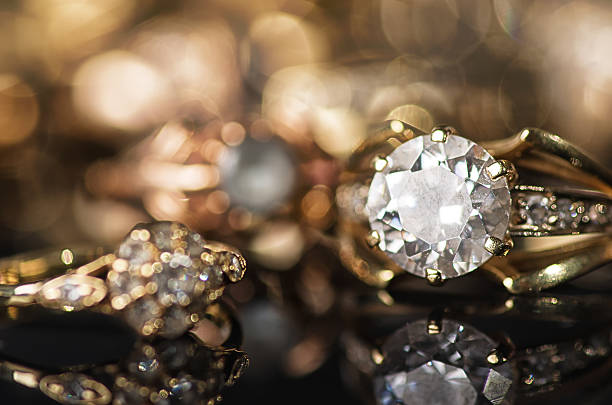
Comprehensive Step-by-Step Guide to Engagement Ring Appraisal: Diamonds, Band, and More
Valuing a diamond ring involves multiple factors, each contributing to the overall worth of the piece. To accurately assess its value, you must consider both the diamond’s quality and the features of the band. This process requires a systematic approach and attention to detail. Below is a step-by-step guide to help you evaluate your diamond ring effectively.
The diamond is usually the most valuable component of a ring, so understanding its quality is paramount.
- Cut:Refers to how well the diamond has been cut and shaped.
- Clarity:Measures imperfections or inclusions within the stone. Fewer inclusions increase a diamond’s value.
- Color:Ranges from colorless (most valuable) to yellow or brown hues. Grading scales typically start at “D” (colorless) and end at “Z” (noticeable color).
- Carat Weight:Larger diamonds are generally more valuable but can be affected by other factors like cut quality.
Diamond certifications from trusted labs (e. g. , GIA or AGS) can provide detailed assessments for these characteristics.
While diamonds hold significant value, the material used for your band’s setting also plays a role in determining its worth.
| Material | Market Value | Durability |
| Platinum | High | Extremely durable |
| White Gold | Moderate | Durable but may require replating over time |
| Yellow Gold | Moderate | Durable with classic appeal |
| Rose Gold | Moderate | Durable with unique aesthetic |
| Sterling Silver | Low | Prone to tarnishing |
Scrutinize whether your band is solid gold/platinum or plated with other metals, as this impacts both value and longevity.
- Unique designs or custom pieces may carry additional value due to their exclusivity.
- Rings from renowned jewelry brands (e. g. , Tiffany & Co. ) often have higher market demand.
- Look for hallmarks or engravings that identify designer brands or purity levels (e. g. , “18K” for 75% pure gold).
- Check recent auction results or online resale platforms like Worthy. com.
- Consult local jewelers for insights into current trends in your area.
Factors Affecting Resale Value:Pre-owned rings often sell at lower prices than their original retail cost. 2. Older styles may appeal less unless they have vintage significance.
- Visit an independent jeweler who specializes in appraisals.
- Request proof of certification if you’re unsure about authenticity.
Many jewelers offer verbal appraisals free of charge; formal written appraisals are usually available for a fee.
By following these steps, you’ll be equipped with all necessary tools to accurately value your diamond ring—whether you’re insuring it, selling it, or simply wanting insight into its worth over time.
Understanding the History and Significance of Engagement Rings
Engagement rings hold a profound place in human history, symbolizing love, commitment, and partnership. Their significance has evolved over centuries, influenced by cultural practices, historical events, and societal trends. Understanding the history of engagement rings enhances their sentimental value and allows us to appreciate their enduring importance in modern times.
The Origins of Engagement Rings
The tradition of engagement rings dates back to ancient civilizations: – Ancient Egypt: Egyptians believed that circles symbolized eternity. Couples exchanged rings made from braided reeds or other natural materials as a representation of their eternal bond.Ancient Rome: Romans introduced the concept of metal bands for engagements. Iron was commonly used initially, but gold eventually became more prominent for those who could afford it.Medieval Europe: By the Middle Ages, diamonds began appearing on engagement rings among European aristocracy. In 1477, Archduke Maximilian of Austria presented Mary of Burgundy with the first documented diamond engagement ring.
Symbolism Behind Engagement Rings
Engagement rings are steeped in symbolism that has persisted throughout centuries: – The Circular Shape: Represents eternity and an unbreakable union.The Left Hand Placement: Traditionally worn on the fourth finger because it was believed to contain the “vena amoris” or “vein of love” that connects directly to the heart.Diamonds as a Choice: Diamonds came into prominence due to their durability and brilliance. They symbolize strength, purity, and everlasting love.
The Evolution of Styles
Engagement ring styles have transformed over time: | Era | Common Features | |—————-|———————————————————-| | Victorian Era | Floral motifs; intricate designs with colored gemstones | | Edwardian Era | Delicate lace-like details; platinum settings | | Art Deco Period| Geometric shapes; bold designs with contrasting colors | | Modern Era | Simple solitaires; custom-designed settings |
Cultural Interpretations Across the Globe
Different cultures have imbued unique meanings into engagement rings: – In some Asian traditions, jade or other gemstones represent luck and prosperity instead of diamonds. – Scandinavian couples often exchange plain gold bands as both engagement and wedding rings. – In many Western cultures, extravagant diamond rings are seen as a status symbol.
Modern-Day Significance
Many couples choose custom designs that reflect their shared story or values. 2. Alternative gemstones like sapphires or emeralds are gaining popularity for ethical or aesthetic reasons. 3. Sustainable practices such as lab-grown diamonds are becoming more widely accepted among environmentally conscious consumers.
Understanding this rich history adds depth to what may otherwise be seen as just an item of jewelry. It underscores how traditions adapt while retaining core aspects that stand as timeless reminders of human connection.
Are You Ready to Upgrade to a New Diamond Ring?
Upgrading your diamond ring is an exciting decision, whether you’re marking a milestone, celebrating an anniversary, or simply seeking something new. However, there are several factors to consider before making this investment. From understanding your budget and preferences to knowing how to deal with your existing ring, here’s a comprehensive guide to help you navigate the process.
Reasons for Upgrading Your Diamond Ring
Many individuals choose to upgrade their diamond rings for a variety of reasons.
- Celebrating Milestones:A significant anniversary or life accomplishment may feel like the perfect time for an upgraded ring design or larger diamond.
- Changing Tastes:Personal style evolves over time; what you loved years ago may not align with your current preferences.
- Improved Financial Position:If your budget has grown since purchasing your original ring, you may want to invest in a higher-quality diamond or a more elaborate setting.
- Sentimental Value:Some couples upgrade their rings to reflect evolving love stories, such as adding additional stones or incorporating heirloom elements into the design.
Key Considerations Before Upgrading
- Determine how much you’re willing and able to spend on the upgrade.
- Factor in expenses like resizing, resetting the stone, or purchasing a completely new piece.
- Decide whether you’d like to trade in or repurpose your current ring. Many jewelers offer trade-in programs that allow you to put the value of the old ring toward a new one.
- Alternatively, you can preserve sentimental value by reusing elements such as the original diamond in a new setting.
- Consider what specifically you’d like in an upgraded piece—this might include a larger center stone, better color and clarity grade, or different metal type for the band (e. g. , platinum instead of gold).
- Research modern trends but also prioritize timeless designs that match your long-term style preferences.
- Review policies on upgrades and trade-ins offered by jewelers near you or online retailers.
- Check for any warranties that might still apply from previous purchases.
Popular Upgrade Options
| Upgrade Option | Description |
| Larger Center Stone | Replace the original stone with one of greater carat weight for added brilliance and size. |
| Halo Settings | Add smaller diamonds around the center stone for extra sparkle and perceived size increase. |
| Band Material Change | Switch from yellow gold to white gold, rose gold, or platinum for updated aesthetics. |
| Additional Accent Stones | Incorporate side stones or pave bands for greater visual interest and complexity. |
What To Do With Your Old Ring
- Trade it in at reputable jewelers who accept diamonds and settings toward credit for new purchases.
- Repurpose it into another piece of jewelry such as earrings or pendants.
- Pass it down as an heirloom within your family if sentimental attachment is strong.
- Sell it independently through certified platforms if maximizing resale value is important.
Upgrading a diamond ring is both personal and financial—it’s about finding something that aligns with both practicality and emotion while creating something you’ll cherish moving forward.
- How to Get a Diamond Ring Appraisal and Understand Its Value
- Understanding Unique Diamond Types: How an Engagement Ring Appraisal Determines Value
- Essential Tips for Calculating the Value of Engagement Rings
- How External Factors Impact the Value of Engagement Rings
- How to Ensure Your Engagement Ring Valuation Is Accurate and Why It’s Important
- Understanding the Purpose and Importance of Appraising Engagement Rings